

People search websites like Whitepages to collect and display details such as your full name, phone number, home address, relatives, and even past locations. While these platforms are designed to help users reconnect or verify identities, they also raise serious concerns about privacy and security. Anyone, including strangers, telemarketers, scammers, or data harvesters, can potentially access your personal information within seconds.
Having your details publicly listed can expose you to unwanted calls, spam messages, identity theft risks, and even personal safety issues. Many individuals are now becoming more aware of their digital footprint and taking steps to remove their data from public directories. Opting out of Whitepages is one of the most important steps toward protecting your online privacy and reducing your exposure to data brokers.
However, the removal process can sometimes be confusing, time-consuming, and repetitive, especially if your information appears in multiple listings or across different data broker websites. That’s where professional assistance can help.
TechniqueHow’s data removal service is designed to simplify this process by identifying your exposed personal information, submitting structured removal requests, and monitoring listings across multiple people-search platforms. This helps reduce your online exposure without the hassle of manually opting out of each site.
In this complete guide, you’ll learn exactly how Whitepages works, why your information appears there, and the step-by-step process to remove your listing successfully. Whether you want to handle the removal yourself or understand how professional services can help, this guide will walk you through everything you need to know to take control of your personal data and improve your online privacy.
What is Whitepages?
Whitepages is one of the most well-known people search platforms that provides access to personal contact and background information. Created as a digital version of traditional phone directories, the platform has evolved into a large data aggregation service that collects and organizes information about millions of individuals across the United States.
The primary purpose of Whitepages is to help users find contact details, verify identities, screen unknown callers, and reconnect with people. While some information is available for free, the platform also offers premium services that provide deeper background details, such as address history, relatives, possible associates, and other public record data.
➡️ Types of Information Displayed:
- Full name and known aliases
- Current and previous home addresses
- Phone numbers (mobile and landline)
- Age range or estimated age
- Names of relatives and associates
- Location history
- Property or public record data (in some cases)
Although this information may come from public sources, many users are surprised by how detailed and easily accessible their personal data is.
➡️ How Whitepages Collects Your Data:
Whitepages gathers information from multiple sources, including:
- Public records (property records, voter registration, court records)
- Telephone directories and carrier data
- Marketing databases and mailing lists
- Third-party data brokers
- Government and municipal databases
These data sources are regularly updated and combined to create detailed personal profiles. Because the information is aggregated automatically, errors, outdated addresses, or duplicate listings are common.
Why You Should Remove Your Information from Whitepages?
Many people don’t realize their personal information is publicly available until they search their own name online. While data aggregation is legal in many regions, having your details listed on platforms like Whitepages can create several risks that affect your privacy, security, and peace of mind.
➡️ Privacy Concerns:
Whitepages makes it easy for anyone to access your personal details within seconds. Information such as your home address, phone number, and family connections can be viewed without your consent. This level of exposure reduces your control over who can access your personal data and how it may be used.
For individuals who prefer to keep their personal life private—such as professionals, remote workers, or families—removing this information is an important step toward maintaining personal boundaries.
➡️ Risk of Identity Theft and Fraud:
Data brokers compile multiple pieces of personal information into one place. When combined with data from other sources, this information can be used by cybercriminals for:
- Identity theft
- Account recovery scams
- Social engineering attacks
- Financial fraud
Even partial details like your previous address or date of birth range can help scammers build a profile to impersonate you.
➡️ Protection of Professional Reputation:
Employers, clients, and business contacts often search names online. Incorrect or outdated information—such as old addresses or incorrect associations—can create confusion or affect your professional image. Removing inaccurate listings ensures that only relevant and controlled information about you is visible online.
➡️ Reducing Your Overall Digital Footprint:
Whitepages is just one of many data broker platforms. However, it is one of the most visible and is widely indexed by search engines. Removing your information from major platforms significantly reduces your overall online exposure and makes it harder for unknown individuals to gather your personal details.
Taking action to remove your data is not just about privacy; it’s about control. By opting out of Whitepages and similar services, you take an important step toward protecting your identity, limiting unwanted access, and maintaining long-term digital security.
Things to Know Before Opting Out:
Before starting the Whitepages opt-out process, it is important to understand a few key details to make the removal process smoother and more effective. Preparing in advance can help you avoid delays, verification issues, or incomplete removal.
First, you will need to find your exact profile URL. Whitepages requires the direct link to your listing when submitting a removal request. Simply searching your name is not enough; you must open your profile and copy the full page link.
The platform uses a verification process to confirm that the request is legitimate. In most cases, this involves receiving a phone call or an automated text message with a code. This step is necessary to prevent unauthorized removal of someone else’s information.
It is also important to understand that removal is profile-specific. If your information appears in multiple listings due to old addresses, phone numbers, or name variations, each profile must be submitted separately.
Another factor to consider is the processing time. Most removals are completed within 24 to 72 hours; however, search engines like Google may require additional time to update their results.
Users should also be aware that data brokers regularly update their databases. This means your information could reappear in the future if new public records or third-party data sources are added. Periodic checks are recommended to maintain your privacy.
How To Opt Out Of Whitepages
Follow these steps carefully to remove your personal information from Whitepages.
Step 1: Search for Your Listing
First, visit the Whitepages website and search for your full name along with your city and state. Check the search results carefully to find the profile that matches your personal details.

If you have lived in multiple locations, try searching using previous cities as well. Open the correct listing and verify that the information belongs to you, including address, phone number, or relatives.
Once confirmed, copy the full URL of the profile from your browser’s address bar. This link is required to submit your removal request.

Step 2: Access the Whitepages Opt-Out Page
After copying your profile link, go to the official Whitepages opt-out or suppression page. This page is specifically designed for users who want their personal information removed from public search results. On the form, you will be asked to paste the URL of your listing into the required field.
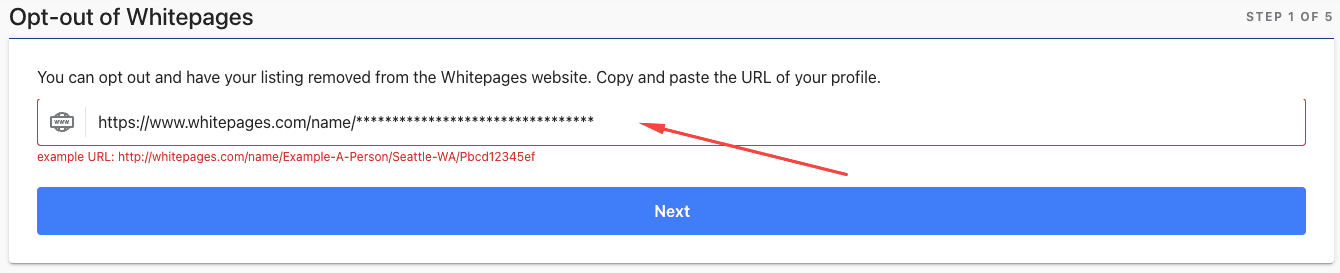

Make sure the link is complete and accurate to avoid errors during processing. Some forms may also ask for a reason for removal, which you can select from the available options.

Step 3: Submit the Removal Request
Once the profile link is entered, proceed by submitting the removal request through the form. Whitepages will review the information and prepare it for verification.
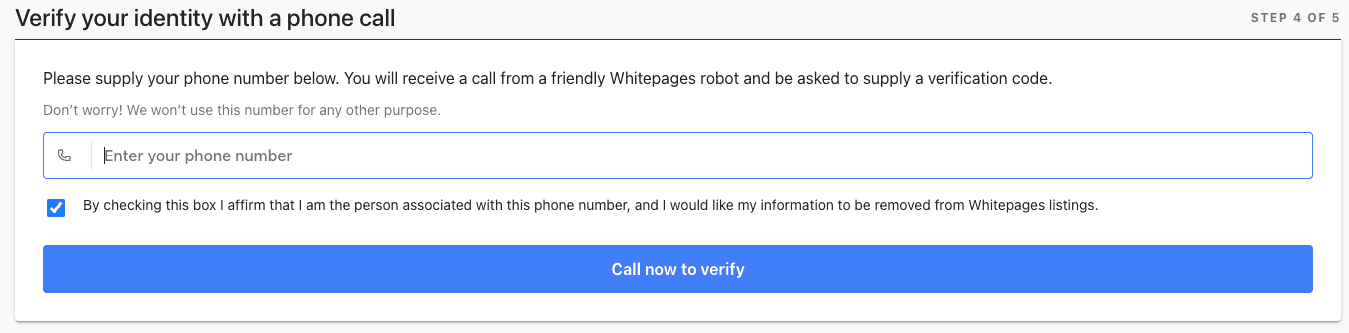
After submission, you will receive instructions for identity verification, which is required to confirm that the request is being made by the individual associated with the listing.
Step 4: Complete Phone Verification
Whitepages typically verifies opt-out requests through an automated phone call. You will be asked to provide a phone number where you can receive the verification code or call. The system will either call you with a confirmation message or provide a code that you need to enter on the website. This process ensures that the removal request is genuine. The phone number used for verification is not added to your listing and is only used for confirmation. Once the verification is completed, your request will move to the processing stage.
Step 5: Wait for Removal Confirmation
After completing the verification, Whitepages will begin processing your removal request. Most listings are removed within 24 to 72 hours, although the exact time may vary. During this period, your profile may still appear temporarily.

Once the removal is complete, the listing will no longer be publicly visible on the website. However, search engines like Google may take a few additional days to update their results.
📌 NOTE
Even after your main profile is removed, your information may still appear in other listings linked to previous addresses, phone numbers, or name variations. You can perform another search on Whitepages using different location combinations to identify any additional profiles. Each listing must be removed individually by repeating the same opt-out process. Checking for duplicates ensures that your personal information is completely removed and prevents partial exposure.
TechniqueHow Data Removal Service
Protecting your personal information across multiple people-search websites can be a time-consuming and repetitive task. While removing your data from Whitepages is an important step, your details may also appear on dozens of other data broker platforms that collect and share personal information. Manually opting out of each site requires searching for listings, submitting individual requests, completing verifications, and regularly monitoring for reappearance.
TechniqueHow’s Data Removal Service is designed to simplify this process and give you greater control over your online privacy. The service helps identify where your personal information is exposed, submits structured and compliant removal requests, and monitors your data across major people-search and data broker websites. This reduces your digital footprint, minimizes unwanted contact, and helps protect your identity from misuse.
Instead of spending hours managing multiple opt-out processes, TechniqueHow provides a streamlined solution to remove and manage your personal listings efficiently.
Online Information
Suppression & Monitoring
Detect visible personal data, initiate compliant removal requests, and perform periodic reviews to prevent reappearance across major platforms.
Request Removal
Data Exposure Scan:
✅ Your personal information is searched across major people-search and data broker platforms to identify active listings.
Listing Identification:
✅ Profiles containing your name, phone number, address, or related details are collected and verified for removal.
Structured Removal Requests:
✅ Opt-out and suppression requests are submitted to each platform using compliant privacy procedures.
Verification Handling:
✅ Required confirmation steps, such as email or phone verification, are managed as part of the process.
Removal Tracking:
✅ Each request is monitored to ensure the listing is successfully removed within the expected timeframe.
Ongoing Monitoring:
✅ Periodic checks help detect if your information reappears due to database updates or new data sources.
This structured approach helps maintain long-term privacy and significantly reduces your online exposure.
Final Checklist: Whitepages Removal Summary
Before finishing the process, use this quick checklist to make sure your information is fully removed and your privacy is protected.
- Search your full name on Whitepages using current and previous locations
- Open each matching profile and copy the exact listing URL
- Submit an opt-out request for every profile found
- Complete phone or identity verification successfully
- Wait 24–72 hours and confirm the listing is removed
- Check Google search results after a few days for updated indexing
- Search again for duplicate listings linked to old addresses or phone numbers
- Repeat the process for any additional profiles found
- Set a reminder to check your name periodically for reappearance
- Consider removing your information from other people-search websites as well
Following this checklist ensures that your data is not partially removed and helps maintain long-term privacy control.
Conclusion:
Your personal information should not be easily accessible to strangers, marketers, or data brokers without your knowledge. Websites like Whitepages collect and publish data from multiple sources, making it simple for anyone to find details such as your address, phone number, and personal connections. Taking the time to opt out is an important step toward protecting your privacy, reducing unwanted contact, and minimizing identity-related risks.
While the manual removal process is effective, managing multiple listings across different platforms can quickly become overwhelming. That’s why many individuals choose ongoing privacy management solutions to reduce their digital footprint more efficiently. Services like TechniqueHow Data Removal help simplify the process by identifying exposed data, submitting removal requests, and monitoring your information over time.
Frequently Asked Questions:
Your personal information appears on multiple websites because data brokers collect and share records from public sources, marketing databases, and third-party aggregators. These companies exchange or sell data to each other, which allows your details to spread across different platforms. Even if you remove your information from one site, it may still exist elsewhere. Since data is updated regularly, your information can also reappear over time unless it is monitored and managed periodically.
Removing your information from major data broker websites significantly improves your online privacy, but it does not make you completely invisible. Public records, social media profiles, and other online activities may still expose certain details. Privacy protection works best when combined with careful sharing habits, strong account settings, and regular monitoring. Limiting the amount of personal information you share publicly helps reduce your digital footprint and lowers the chances of your data being collected again.
The most sensitive personal information includes your home address, phone number, email address, date of birth, financial details, and identification numbers. When combined, these details can be used for identity theft, fraud, or social engineering attacks. Even partial information, such as previous addresses or family connections, can increase risk. Protecting this data by limiting public exposure, adjusting privacy settings, and removing it from data broker sites helps reduce the chances of misuse.